
Global plastic output has grown at nearly 4% per year over the past decade, generating roughly 400 million tonnes of waste plastic every year. About 46% of this volume falls into the category of low-value mixed waste plastic—highly contaminated, with unstable calorific value and difficult to handle through mechanical recycling. For years, this fraction has been routed to incineration or landfill.
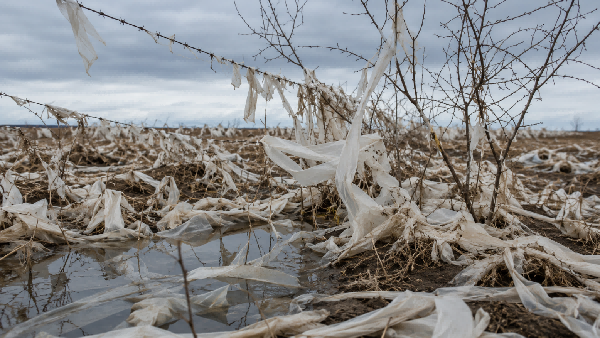
Mechanical recycling can only absorb high-quality, single-stream feedstock; it cannot offer a complete answer for low-value mixed waste plastic. Incineration recovers thermal energy but discards the molecular value of plastics. With the EU’s PPWR (Packaging and Packaging Waste Regulation) coming into force and major brand owners committing to ESG targets, plastic disposal has evolved from an environmental topic into an industrial one. Whether low-value waste plastic can be processed at scale, on a continuous basis, and in a compliance-ready manner has become a focal point of global environmental policy.
Plastics are essentially high-molecular-weight polymers. Mechanical recycling merely reuses pre-formed plastic in shredded form; the molecular structure remains unchanged, and performance degrades with every cycle. The core of plastic chemical recycling is to bring plastics back to their “original state” at the molecular level—using pyrolysis, gasification, or depolymerisation to break long-chain polymers down into small-molecule hydrocarbons, which then re-enter the petrochemical chain as feedstock for new polymerisation. In theory, this enables an “infinite loop.”
Among the various chemical recycling routes, chemical recycling pyrolysis has been identified by the International Energy Agency, the European Commission Joint Research Centre, and China’s National Development and Reform Commission as one of the most industrially viable pathways.
Batch vs. Continuous: The Industrial Divide Within Plastic Pyrolysis
The equipment used for waste plastic chemical recycling falls into two categories: batch systems and fully continuous systems. Batch pyrolysis units were widely used in early international projects, but three structural weaknesses have surfaced during scale-up:
– Coking: each batch runs as a single cycle, leading to severe coke build-up on the reactor wall and a high proportion of downtime for de-coking.
– Dynamic sealing: feeding stages involve large temperature and pressure swings, causing seal failure under continuous operation.
– Inconsistent product quality: process parameters are difficult to control batch-to-batch, leading to wide variation in pyrolysis oil quality—rarely meeting the standards required by downstream petrochemical users.
Fully continuous pyrolysis equipment, through an integrated redesign of the reactor, feeding system, and in-line monitoring, addresses these three issues at their root, enabling stable operation across multi-month runs. A plastic pyrolysis plant with genuine industrial-grade value should satisfy four core requirements:
- Scale – per-line throughput in the tens of thousands of tonnes, so that economies of scale offset the fixed investment.
- Continuity – continuous feeding, continuous discharge, continuous de-coking, with no need for periodic shutdowns.
- Intelligence – integrated control combined with in-line monitoring, with key process parameters adjusted adaptively and minimal manual intervention.
- Economics – a controllable payback period and a per-tonne processing cost compatible with broad industrial deployment.
Niutech: A Continuous Pyrolysis Solution Validated in the Field
Niutech is a Chinese supplier of high-end, fully continuous pyrolysis equipment, with more than 30 years of focus on pyrolysis technology. Its technology has received China’s State Science and Technology Progress Award—the country’s top recognition for environmental-technology innovation.
Niutech’s self-developed industrial continuous pyrolysis equipment has been deployed in Denmark, the United Kingdom, South Korea, Thailand, Vietnam, and within China, in projects operating at a ten-thousand-tonne-per-year scale. Some of these projects have been in stable operation for more than 10 years.
For different feedstock scenarios — low-value mixed waste plastic, ocean plastic, post-consumer textiles—Niutech provides end-to-end solutions. The pyrolysis oil produced by these projects offers consistent quality and has been certified under the ISCC (International Sustainability and Carbon Certification) scheme, providing downstream chemical and refining industries with a reliable supply of recycled feedstock.
If your team is following the chemical recycling of waste plastic or planning to evaluate a plastic pyrolysis plant, you are welcome to contact us.