
Plastic pollution has become an environmental challenge shared by countries around the world. As nations set higher requirements for resource recycling, the drawbacks of relying on landfill, incineration, or conventional mechanical recycling are becoming increasingly evident. Traditional mechanical recycling offers cost advantages when handling clean, single-stream waste plastics, but it struggles to effectively process the mixed, contaminated, and low-value plastics that make up a large share of plastic waste. Against this backdrop, plastic pyrolysis has emerged as a new technology drawing global attention, driving plastic recycling innovations, and serving as an important technical route that complements the existing waste plastic management system.
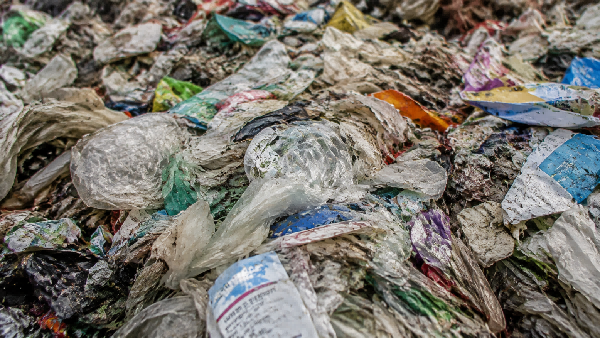
Chemical recycling of waste plastics involves heating plastics in an oxygen-free or oxygen-deficient environment, breaking down the long chains of polymers and converting them back into usable oil and gas products. In simple terms, it is a “plastic to oil” process. It brings waste plastics that mechanical recycling cannot handle back into the resource loop, transforming them into pyrolysis oil that can be used as fuel or chemical feedstock, thereby raising the value of waste at its source. Among the various forms of chemical recycling, continuous pyrolysis is becoming a key focus for the industry thanks to its stability and scalability. Compared with traditional batch processes, the advantages of continuous pyrolysis technology can be summarized in the following five aspects.
First, continuous and stable operation. Continuous pyrolysis plants enable uninterrupted feeding, reaction, and discharging, avoiding the energy losses and equipment wear caused by the frequent start-stop cycles of batch processes. This capability for long-term stable operation lays the foundation for large-scale production and is one of the most critical of all plastic pyrolysis benefits.
Second, controllable product quality. Through precise control of key parameters such as reaction temperature and residence time, continuous processes can achieve more stable pyrolysis oil quality. This provides a more reliable feedstock for downstream upgrading and diversified utilization, turning waste plastics into recycled resources with genuine market value.
Third, higher energy efficiency. Continuous systems make efficient use of the energy generated during the reaction through flue-gas waste heat recovery and cascade heat utilization. This lowers the energy consumption per unit of processing while reducing process emissions, aligning more closely with green and low-carbon development.
Fourth, strong scalability. Continuous technology is better suited to industrial scenarios involving large throughput and long-running operations. It can meet the capacity demands of regionally centralized processing, providing technical support for building stable and replicable waste-plastic resource recovery projects.
Fifth, improved automation and safety. Highly automated continuous systems reduce manual intervention and, combined with comprehensive process safety design, help complete the resource conversion of waste plastics under enclosed and controlled conditions, enhancing overall operational safety and environmental performance.
Continuous pyrolysis is not intended to replace mechanical recycling, but to complement it, together forming more complete sustainable plastic solutions. Mechanical recycling handles the high-value, easy-to-recycle fraction, while chemical recycling takes on the difficult, low-value fraction. Only through this synergy can more waste plastics re-enter the cycle, truly achieving the principle that “resources are finite, but recycling is infinite.”
As a high-end equipment manufacturer with a long-term focus on pyrolysis technology, Niutech has been dedicated to the field of continuous pyrolysis for more than three decades. Working with various organic wastes such as waste plastics and waste tires, the company has built systematic capabilities spanning technology R&D, equipment manufacturing, and project operation. Drawing on its core continuous pyrolysis technology and its dual-driven model of “equipment sales + project operation,” Niutech is committed to helping customers worldwide efficiently convert waste plastics into high-quality pyrolysis products, providing replicable and scalable technologies, equipment, and solutions that advance plastic resource recycling and green, low-carbon development.