
On June 18, the European Parliament approved the new EU End-of-Life Vehicles (ELV) Regulation, which was subsequently adopted. Three major European recycling associations—FEAD (European Waste Management Association), Recycling Europe, and FER (Spanish Recycling Federation)—unanimously endorsed the regulation’s circular economy orientation while collectively issuing a warning: “Whether the policy will be effective depends critically on its subsequent implementation.”
I. Core Elements of the New ELV Regulation
The new regulation stipulates that all new vehicles must be designed to facilitate easy disassembly and recycling of a large number of components. For the plastic content of each vehicle model, the EU has set mandatory recycled content targets: within six years of the regulation’s entry into force, recycled plastics must account for at least 15%, and within ten years, this proportion must rise to 25%. At least 20% of the recycled plastics must originate from end-of-life vehicles and recycled parts—what the industry refers to as “closed-loop recycling.”
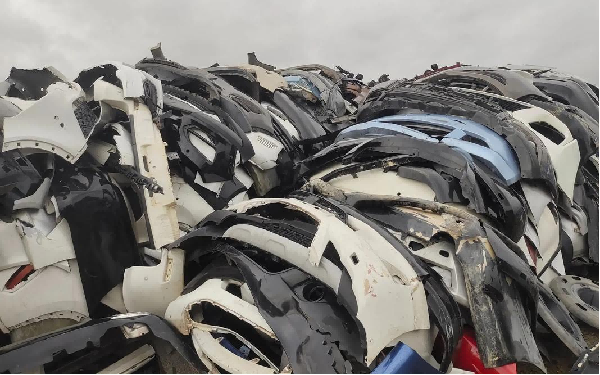
Currently, over 800,000 tons of waste plastics from end-of-life vehicles are incinerated or landfilled annually in Europe. The core challenge in automotive plastic recycling is that economics is the biggest obstacle: fragmented supply chains and high costs result in a closed-loop recycling rate of only 2.5%. Although mechanical recycling technology is mature, its efficiency and product quality are often limited when dealing with complex, contaminated, or additive-containing multi-layer plastics.
The new regulation explicitly allows chemical recycling technologies to count toward recycled content targets and permits the use of the mass balance method for accounting. This policy recognition carries profound significance: chemical recycling, centered on plastic pyrolysis, can process low-value waste plastics that cannot be effectively utilized by mechanical recycling. Plastic pyrolysis generally refers to the technology of converting plastics into fuel through plastic-to-oil systems, with the main pyrolysis products being pyrolysis oil, solid fuel, and non-condensable combustible gas, which can be further processed to produce new plastics, achieving a genuine “chemical recycling of waste plastics.”
II. Niutech: An Industrial Benchmark for Chemical Recycling of Waste Plastics
Niutech’s self-developed industrial continuous intelligent pyrolysis equipment represents a world-leading level in the field of chemical recycling of waste plastics. The technology employs eight core technologies, including “thermal dispersion, gas-tight sealing, and anti-polymerization,” and is equipped with an intelligent control system that monitors and adjusts nearly 20,000 parameters in real time, ensuring continuous operation time far exceeding the industry average at a 10,000-ton processing scale.
Niutech’s technology and equipment have been successfully commercially deployed in multiple developed countries in Europe and America, with the longest operational track record exceeding 10 years.
The Danish waste plastic pyrolysis project, a 10,000-ton-scale chemical recycling project invested in by the global chemical giant BASF, marks a testament to Niutech’s technology reaching world-leading standards. The project processes mixed waste plastics from a self-built municipal solid waste treatment station and surrounding plastic recycling facilities, producing high-quality pyrolysis oil that is subsequently used as feedstock for plastic production through deep processing, thereby achieving chemical recycling.
The new EU ELV regulation is set to reshape the automotive recycled plastics market landscape. According to forecasts from the industry analysis firm ICIS, the recycled content targets will primarily be met through recycled polyolefins. It is projected that by 2040, the European market demand for recycled polyolefins will reach 500,000 to 600,000 tons, with recycled polypropylene accounting for the major share.
As the ELV regulation is progressively implemented, chemical recycling technology will transition from an “optional solution” to a “must-have,” becoming a critical pillar for the automotive industry to achieve its circular economy goals. The industrial practices of companies like Niutech demonstrate that chemical recycling of waste plastics is not only an environmental choice but also a commercial pathway that delivers both economic and environmental benefits—by turning “white pollution” into “urban oil fields,” chemical recycling is driving the automotive industry toward a truly circular economy transformation.