
As global vehicle ownership continues to grow, the volume of waste tires generated each year is also increasing. Waste tires are bulky, difficult to degrade, and may occupy large areas of land when stockpiled for long periods. They can also create fire risks and environmental pressure. Against this background, waste tire recycling has become an important topic in the global circular economy. Through innovative technologies, waste tires can be converted into pyrolysis oil, recovered carbon black, steel wire, and non-condensable combustible gas, allowing low-value and scattered waste treatment to move toward large-scale and resource-oriented utilization. Among these technologies, tire pyrolysis is gaining increasing attention due to its resource recovery potential and its ability to support safer and more environmentally controlled waste treatment.
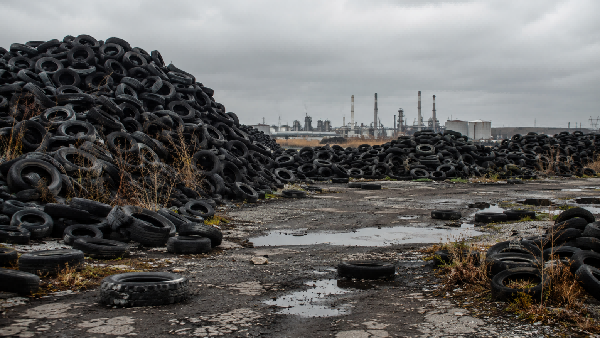
The basic principle of the tire pyrolysis process is to heat waste tires under oxygen-free or oxygen-limited conditions. During this process, organic components such as rubber undergo thermal decomposition and are converted into pyrolysis oil, combustible gas, recovered carbon black, and other products, while steel wire and other metal materials are separated for recycling. Compared with traditional landfill or incineration, the value of pyrolysis lies not only in reducing waste volume but also in converting waste tires into energy and material resources that can be further utilized. In this sense, tire pyrolysis is an important pathway for waste-to-energy and resource recovery.
As the industry develops, the focus of the market is also changing. In the early stage, discussions were often centered on whether waste tires could be pyrolyzed and what products could be generated. Today, more project developers are paying attention to the economic feasibility, safety, environmental performance, and long-term operating capability of large-scale pyrolysis projects. Mature continuous pyrolysis technology is expected not only to process waste tires steadily, but also to maintain relatively stable oil and gas recovery efficiency and product quality during long-term operation. Public industry information shows that several large-scale waste tire recycling and pyrolysis projects have attracted market attention in recent years, indicating that large-scale projects are placing higher requirements on pyrolysis equipment.
Under this trend, the value of a continuous pyrolysis plant is becoming more evident. Compared with traditional batch-type pyrolysis equipment, continuous systems can support continuous feeding, continuous discharging, and more stable reaction control. This helps reduce energy fluctuations and management pressure caused by frequent start-stop operations, making the technology more suitable for long-term industrial operation. For customers planning to enter the tire recycling business, the selection of pyrolysis technology should not focus only on the price of a single machine. It should also consider processing capacity, operational stability, environmental control, product pathways, maintenance services, and the overall operating capability of the project.
Niutech is a China-based manufacturer of high-end continuous pyrolysis equipment, with more than 30 years of experience in pyrolysis technology development and industrial application. Its related technological achievements have received the National Science and Technology Progress Award in China. Based on the resource recovery needs of waste tires, waste plastics, oily sludge, and other organic solid wastes, Niutech has developed industrial continuous pyrolysis technologies and complete equipment solutions. For the waste tire recycling market, Niutech continues to upgrade its continuous pyrolysis equipment to meet the requirements of large-scale projects for stable operation, resource recovery, and environmental control.
With continued research and project experience, the application value of waste tire pyrolysis is also expanding. Pyrolysis oil may enter fuel, industrial feedstock, or further circular utilization pathways depending on downstream processing conditions. Combustible gas can be reused within the system for energy supply when safety and environmental requirements are met. Recovered carbon black can be further processed and explored for use in rubber, plastics, building materials, and other fields. Steel wire can also be recycled into the metal resource circulation system. Therefore, the significance of waste tire resource recovery lies not only in reducing waste pressure but also in transforming difficult-to-treat solid waste into reusable resources through a systematic technology pathway.
Facing the growing global demand for waste tire recycling and resource utilization, Niutech can provide integrated solutions covering process design, equipment manufacturing, installation, commissioning, and operational services. These solutions are designed to help customers address key project requirements, including large-scale processing, stable operation, energy utilization, and product recovery. As waste tire treatment moves from low-value and scattered disposal toward continuous, large-scale, and resource-oriented utilization, continuous pyrolysis technology and complete equipment systems will play an increasingly important role in the future tire recycling business.